I. Introduction
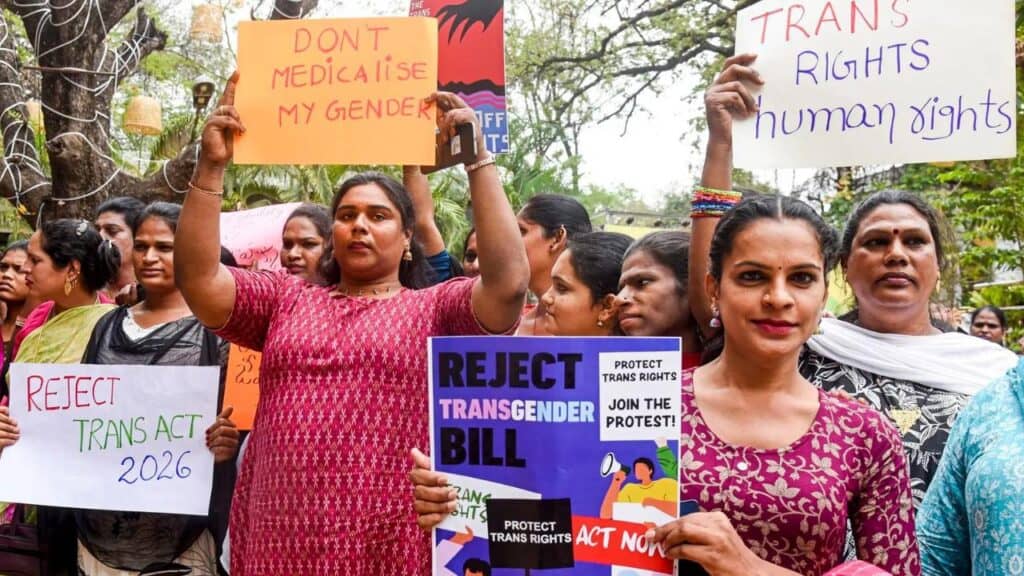
The Transgender Persons (Protection of Rights) Act 2019 was, from the outset, an uneasy compromise. It recognized a “right to self-perceived gender identity” under Section 4(2), yet routed that very right through a District Magistrate and a Certificate of Identity, prompting years of litigation and criticism from various organizations. The Transgender Persons (Protection of Rights) Amendment Bill, 2026 was an opportunity to cure these defects. It did the opposite of that. Clause 3 of the Amendment omitted Section 4(2) entirely, extinguishing the statutory right to self-identification. Clause 2(iv) also narrowed the definition of a “transgender person” to specified socio-cultural identities and medically defined intersex persons, with a proviso stating the definition “shall not include, nor shall ever have been included”, self-perceived gender identities, which is a retrospective exclusion. The amendments also introduce a medical board “authority”, and Clause 4 makes the District Magistrate’s Certificate of Identity conditioned on that authority’s recommendation. The Amendment also made a post-surgical certificate mandatory and inserted a new Section 7(1A), requiring hospitals to report every gender-affirming surgery to the State. It also introduced a life sentence for several vaguely worded offences involving causing a person to outwardly present a transgender identity.
When we test these amendments against Articles 14, 15, 19(1)(a) and 21, and against a constitutional arc that runs from Maneka Gandhi to Navtej Singh Johar, they do not just fall short of the standard the Supreme Court has set. They walk backward from a floor the Court has already fixed.
II. Self-Identification as a Constitutional Floor
National Legal Services Authority v Union of India provides the constitutional starting point. In recognizing gender identity, the Court did more than acknowledge a right to choose a gender marker; it located that choice within the very conception of personhood. It held that gender identity “lies at the core of one’s personal identity, gender expression and presentation” and is protected both as an aspect of expression under Article 19(1)(a) and as an element of dignity under Article 21. The significance of this recognition is reflected when the Court directed the Union and the States to legally recognize a person’s self-identified gender without making that recognition conditional upon surgery or medical proof.
Justice K.S. Puttaswamy v Union of India subsequently gave this principle a deeper constitutional foundation by locating bodily integrity, decisional autonomy and informational privacy within Article 21. Navtej Singh Johar v Union of India carried the logic further, recognizing that the “destruction of individual identity” constitutes a “crushing of intrinsic dignity”, while its anti-majoritarian reasoning underscored why the rights of sexual and gender minorities cannot be made contingent upon the approval of legislative majorities. Taken together, these decisions suggest that self-identification is not merely a legislative policy choice that Parliament may recalibrate at will, but a constitutional floor below which legal recognition cannot fall. As the judges observed in Ganga Kumari v State of Rajasthan while considering this very bill, such an approach risks reducing “an inviolable aspect of personhood” to “a contingent, State-mediated entitlement”.
III. Article 14: A Classification without a Rational Nexus
Article 14 permits classification only where it rests on intelligible differentia that bears a rational nexus to the statute’s object, which was the twin test established in State of West Bengal v Anwar Ali Sarkar. The 2026 Bill’s narrowed definition draws a striking line: it retains visibly socio-cultural identities, such as kinner, hijra, aravani and jogta, alongside biomedically defined intersex person, while excluding self-perceived trans men, trans women and non-binary persons, retrospectively. Yet this distinction bears no discernible relationship to the Act’s stated purpose of protecting transgender persons from discrimination and violence. Indeed, it removes from protection precisely those persons whom NALSA recognized as entitled to legal recognition, while leaving untouched the vulnerability that the statute exists to address. The classification therefore does not merely narrow the statute’s reach; it cuts against its own protective purpose. A classification that excludes the very persons the statute purports to protect, without advancing that statutory object, cannot withstand Article 14’s scrutiny.
IV. Article 19(1)(a): A Prior Restraint on Gender Expression
NALSA held that the right to determine and express one’s gender identity is not merely an incident of privacy but flows from Article 19(1)(a) itself. The Madras High Court gave that principle concrete force in Nangai v Superintendent of Police, holding that a person’s declaration of gender identity “flows from Article 19(1)(a)” and the State cannot interfere with its exercise. The constitutional difficulty with the 2026 Bill therefore lies not simply in the requirement of certification, but in the power it places between a person and their own expression because according to the Amendment legal recognition has become conditional upon the prior approval of a government-appointed medical board. In effect, the State decides whether an individual may have their identity officially acknowledged before the identity can acquire legal force. That is precisely the kind of condition that negates the expression of that identity that Navtej Singh Johar v Union of India cautioned against. Nor is the restriction readily saved by Article 19(2). The Bill’s stated concern, i.e. misuse of welfare benefits, is not an enumerated ground, and even if it were, subjecting an entire class to compulsory medical examination would require a far closer showing of necessity and proportionality. The government’s own data further complicates the justification as it is stated that barely 6.7 percent of the Census-recorded transgender population had obtained even the comparatively simple, affidavit-based certificate under the 2019 regime. That points to under-registration, not widespread fraud.
V. Article 21: Dignity, Privacy and the Maneka Gandhi Test
Maneka Gandhi v Union of India requires that any procedure depriving a person of liberty under Article 21 be right, just and fair. Justice Krishna Iyer also warned against the legislative majorities prescribing demeaning modalities for minorities, holding that right to life cannot be made “hostage to a legislature’s mood”. Against the Constitutional backdrop, requiring a transgender person to appear before a medical board before the State will recognize who they are is difficult to reconcile with the right to live with dignity and autonomy. The procedure does not merely verify an entitlement; it places the State in the position of determining whether an individual’s own account of their identity is sufficiently authentic to receive legal recognition. Section 7(1A) deepens that intrusion by requiring hospitals to report every gender-affirming surgery to the District Magistrate and the medical board authority. The resulting privacy concern is therefore not incidental. It creates a mechanism through which intimate medical information becomes available to the State, with obvious implications for involuntary disclosure and stigma. Measured against the proportionality framework in Puttaswamy, which is, legality, legitimate State aim and proportionality, alongside procedural safeguards against abuse, the provision faces a fundamental difficulty, which is, that the State must justify not only why such information is needed, but why collecting it in this manner is necessary to achieve the asserted aim. This invasion of privacy collapses the protection promise given by the Act.
VI. A Colonial Logic, Revived
The deeper objection is structural. By requiring gender identity to be verified by a State-appointed authority before it can acquire legal recognition, the 2026 Bill shifts the relationship between the individual and the State: from recognizing identity as something possessed by a person to treating it as something the State must first classify and authenticate. That logic has an uncomfortable colonial history. Under the Criminal Tribes Act, 1871, entire communities were categorized by the State and subjected to regulation and surveillance on the premise that their identity itself justified heightened State control. The Bill does not criminalise transgender persons in that manner, but it revives a related premise: that the State is entitled to determine whether a person’s claimed identity is sufficiently authentic to receive legal recognition. This is also why the withdrawal of Section 4(2) sits uneasily with the doctrine against retrogression. Once the law has recognised a right, removing that recognition demands constitutional justification, particularly where the right is grounded in dignity and autonomy.
VII. Conclusion
The 2026 Bill has already generated overlapping constitutional challenges like a writ petition before the Supreme Court, a note from a Supreme Court-constituted Advisory Committee urging its withdrawal, and pending proceedings. Yet beneath these proceedings lies a more fundamental constitutional question: who gets to determine a person’s gender identity? NALSA, Puttaswamy and Navtej answer that question by placing identity, autonomy and dignity in the hands of the individual, not the State. The 2026 Bill reverses that constitutional starting point. By making recognition conditional upon State verification, it transforms a right into an entitlement that must first be certified by the very authority from which the Constitution was meant to protect individual autonomy. The problem, therefore, is not merely that the Bill regulates an existing right differently. It alters the constitutional relationship between personhood and the State, reopening a question that NALSA had already answered.
Sakshi Arora is a law student at Jindal Global Law School, O.P. Jindal Global University.