I. Introduction
India’s approach to intellectual property adjudication assumes that specialisation, once created, sustains itself. The Delhi High Court’s Intellectual Property Division (“IPD”) is routinely held up as proof that the system corrected itself after the Intellectual Property Appellate Board (“IPAB”) was abolished. It did not. It proves only that the system can organise a specialised docket, not that it can sustain one.
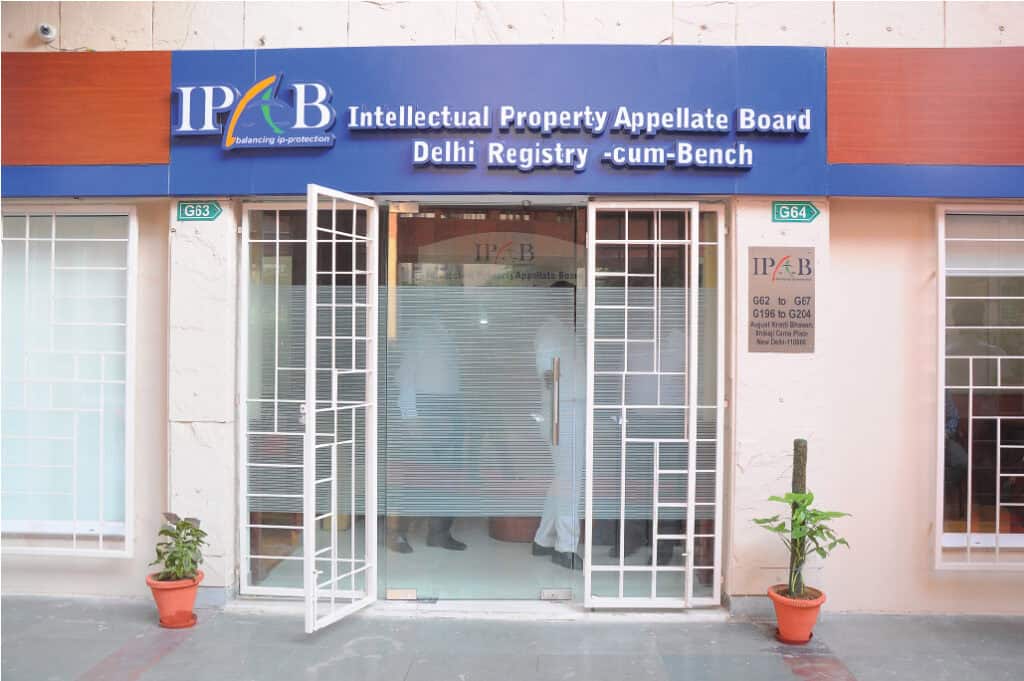
On 4 April 2021, India abolished the IPAB by ordinance, later enacted as the Tribunals Reforms Act 2021, folding its jurisdiction into five High Courts.[1] The stated reason was institutional failure: a mounting backlog, and a board seen as dysfunctional. Five years on, whether the inheriting courts were built to do better is, only partly.
Institutional expertise is not just what a judge knows; it is practice and continuity that outlast a change in personnel. India’s post-IPAB reforms built specialised procedure without building anything that survives the judges applying it.
The IPAB was created in 2003 to bring technical expertise to a domain the High Courts had handled inconsistently, pairing judicial with technical members from patent examination and pharmaceuticals.[2] What broke it was neglect, not concept: vacancies on both benches sat unfilled for over a year at a stretch as the caseload climbed into the thousands. The Standing Committee that reviewed the abolition recommended reconstituting the IPAB, not scrapping it.[3] Parliament went ahead anyway, and the expertise its members had built disappeared with them.
II. The Delhi IPD: Progress, With a Catch
Delhi moved first. Its IPD was announced in July 2021 and became operational once dedicated Rules were notified on 24 February 2022.[4] Technically qualified researchers and subject-matter experts assist the court, but their role has limits. They brief a bench, but not constitute it, and the legal-technical synthesis producing a reasoned judgment remains the judge’s own. The numbers still impress: the IPD disposed of 187 of 414 pending patent appeals in its first year, and between January 2023 and June 2024 disposals kept pace with, and in places outstripped, fresh filings, with timelines nearly halved.[5]
What has not drawn enough scrutiny: IPD judges rotate out through the same roster process as any other bench, so proficiency must be rebuilt by successors rather than retained. This is not hypothetical- the IPD’s composition changed twice within seven months, reconstituted in November 2022 and reshuffled again the following June, when the bench shrank to two judges.[6] On a technical docket, fluency resets with every rotation; no expert panel can substitute for that continuity, since its role is advisory, not decisional.
III. What Actual Specialisation Looks Like
The UK’s Intellectual Property Enterprise Court offers a useful, layered contrast: its multi-track is presided over by a full-time specialist Circuit Judge (currently HHJ Hacon) alongside a standing panel of nominated deputy judges from the IP Bar who hear cases part-time but repeatedly, while the lower-value small claims track goes to non-specialist district judges.[7] What matters is that pairing of a continuously-serving specialist with recurring named deputies: fluency compounds because the same people keep returning to the docket, not because one judge hears everything.
China’s dedicated IP courts in Beijing, Shanghai, and Guangzhou go further: judges are drawn overwhelmingly from IP-law backgrounds, several with over a decade of trial experience, making appointment a career track rather than a rotating assignment.[8] Both models reflect a choice India has not made: specialisation protected through structure, not left to goodwill. India’s IPD Rules say nothing about tenure, selection, or how memory survives rotation- a forum specialised on paper, generalist in practice.
None of this is to argue that generalist judging lacks merit: it may avoid doctrinal insularity and keep IP reasoning consistent with commercial law. This article’s concern is narrower: that specialisation, once chosen by Parliament, should not evaporate every time a roster changes.
IV. A Gap That Refuses to Close
Five years in, the picture across India is still patchy. Delhi has a functioning IPD. Madras notified its own IP Division Rules on 5 April 2023, becoming the second of the five to do so.[9] Himachal Pradesh followed on 8 July 2024, closely modelled on Delhi’s.[10] Calcutta notified on 20 September 2024, operational that November.[11] Karnataka’s High Court formed a sub-committee, including a nominated academic, to draft Rules in June 2024, with no draft yet notified.[12] Bombay’s Rules remain in stakeholder consultation, with bodies including the International Trademark Association submitting recommendations as recently as July 2025.[13] Gujarat, the fifth court to inherit IPAB jurisdiction, has gone no further than assigning IP matters to a non-exclusive bench.[14] Neither publishes disposal data as Delhi does, itself a symptom of the gap this article describes.
The gap is not hypothetical. In Arijit Singh v Codible Ventures LLP, the Bombay High Court held, at the ex-parte interim stage, that AI-generated voice cloning can violate a performer’s personality rights. However, the July 2024 order came not from a specialist IP bench, but only a single judge of Bombay’s ordinary commercial division, the exact kind of dispute a specialist bench exists to handle. [15]
Where a case is filed determines not just how fast it moves but the institutional support behind it. Disputes now arriving- AI-generated content, standard-essential patents, cross-border licensing- are increasingly hard for generalist courts to manage without sustained preparation.
V. What Needs to Change
Three things need to happen, and each needs more precision than “more specialisation.”
First, Parliament’s own Standing Committee on Commerce recommended, in an April 2022 action-taken report, that IP divisions on the Delhi model be established in every High Court.[16] Since roster assignment falls within the Chief Justice’s authority as “Master of the Roster,”[17] this is better secured through a Chief Justices’ Conference resolution or Supreme Court administrative direction than through Parliament, which would sit uneasily with judicial independence.
Second, roster committees should adopt a minimum tenure norm for IPD assignments- at least the typical one-to-two-year cycle, ideally three, long enough to see a docket through more than one filing cycle before rotating out.
Third, IP education should become a standing National Judicial Academy programme, not an occasional workshop: an annual module for newly assigned IPD judges on AI-generated content, standard-essential patents, and cross-border licensing- the categories already straining generalist benches- with the Department for Promotion of Industry and Internal Trade, which already administers India’s IP policy architecture, tasked with tracking compliance and publishing comparative disposal data annually.
The real lesson of the IPAB’s abolition was not that specialisation fails; it is that expertise does not survive on institutional goodwill alone. If India wants specialised IP adjudication, it must build courts that hold onto knowledge, not simply generate it and watch it walk out the door.
[1] Tribunals Reforms (Rationalisation and Conditions of Service) Ordinance 2021 (Gazette of India, 4 April 2021), subsequently replaced by the Tribunals Reforms Act 2021 (No 33 of 2021).
[2]Trade Marks Act 1999; Geographical Indications of Goods (Registration and Protection) Act 1999, constituting the IPAB with effect from 15 September 2003.
[3]Department-Related Parliamentary Standing Committee on Commerce, Review of the Intellectual Property Rights Regime in India, 161st Report (23 July 2021).
[4]High Court of Delhi, Office Order No 667/Original Side/DHC (7 July 2021); Delhi High Court Intellectual Property Rights Division Rules 2022, Notification No 13/Rules/DHC (24 February 2022).
[5]Delhi High Court Intellectual Property Division, Annual Report 2022-23 (2023) 50–51; Second Annual Report 2023-24 (2024); IAM (2023).
[6]High Court of Delhi, Roster Notifications (28 November 2022 and 26 June 2023); SpicyIP, DHC IPD Roster Revision (28 June 2023).
[7]Senior Courts Act 1981 (UK) s 62; CPR 1998 (UK) Part 63; Courts and Tribunals Judiciary (England and Wales), The Intellectual Property Enterprise Court Guide (rev edn, November 2024) para 1.2.
[8]Standing Committee of the National People’s Congress (China), Decision on the Establishment of IP Courts in Beijing, Shanghai and Guangzhou (31 August 2014); Harris Sliwoski LLP (2025).
[9]High Court of Madras, Intellectual Property Rights Division Rules 2022 (Tamil Nadu Gazette, 5 April 2023).
[10]High Court of Himachal Pradesh, IPD Rules 2022, Notification No HHC-IPD/Rules/2022 (8 July 2024).
[11]High Court at Calcutta, IPD Rules 2023 (Kolkata Gazette, 20 September 2024).
[12]High Court of Karnataka, Notification Constituting Sub-Committee to Draft IP Division Rules (20 June 2024).
[13]International Trademark Association, ‘Momentum Builds for Dedicated IP Bench at Bombay High Court’ (5 November 2025).
[14]WIPO, International Guide to Patent Case Management for Judges (India ch, s 6.11.3).
[15]Arijit Singh v Codible Ventures LLP & Ors, 2024 SCC OnLine Bom 2445 (Bombay HC, 26 July 2024).
[16]Department-Related Parliamentary Standing Committee on Commerce, Action Taken Report on its 161st Report, 169th Report (6 April 2022) para 3.12.
[17]State of Rajasthan v Prakash Chand (1998) 1 SCC 1 (Chief Justice’s administrative authority as master of the roster).
Bhairavi Singh is a student at Jindal Global Law School, O.P. Jindal Global University