I. Introduction
Indian filmmaker and producer Imtiaz Ali has found himself in the midst of controversy over his remarks in a recent interview. The filmmaker exclaimed, “I don’t like when someone says I am comfortable in my Burqa. I am comfortable in my purdah. It’s a degenerated society; if you feel like this, it’s not okay. It means that you have become so victimised in your mind, I don’t know how.”
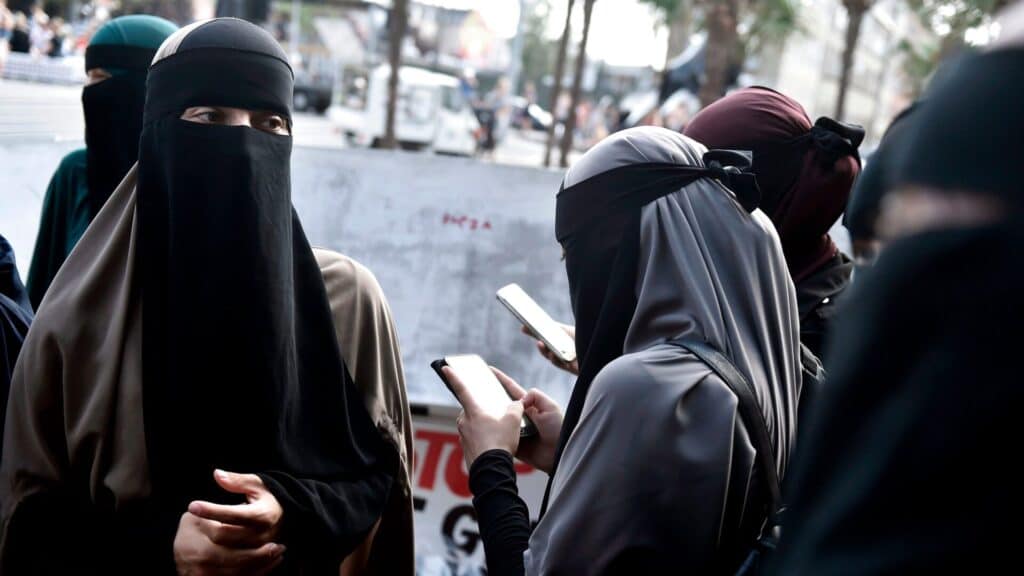
Although, the statement appears to invoke the language of female emancipation and challenge patriarchal norms, it paradoxically reflects the very values it seemingly seeks to oppose. When a woman states, wilfully, that she is comfortable in her chosen attire, the response of the filmmaker is not only a counter-argument to her choice but also a diagnosis addressed to her psychology.
The authors attempt to demonstrate how the above statement is not just problematic but also fails on legal, feminist, and empirical grounds. At the outset, the authors clarify that the scope of the blog is restricted to willed veiling alone, where a woman affirms, without external compulsion or penalty, that the practice reflects her own preference. This piece has nothing to do with state-imposed purdah under regimes, such as Taliban-ruled Afghanistan, where ‘choice’ is a euphemism for coercion backed by force. The blog post narrows to the question: on what basis does another get to override her own account of her life?
II. Where Does the Choice Lie? In Masculine Approval or Feminine Emancipation
The very foundation of the statement, “I don’t like….” followed by a verdict of ‘degenerated society’ and ‘victimisation’, is beyond being opinionated. It has been witnessed for long that the idea of women having choices of their own has been heavily patronised by men. This comes in multiple forms and shape. For instance, the confidence that men display while acting as a spokesperson for women. It is the same confidence displayed by Mr. Imtiaz when he begins his statement with “I don’t like…”, followed by a matter of women’s choice of clothing. One fails to find a difference between statements by conservatists saying they do not like women wearing short clothes and the statement by Mr. Imtiaz. Interestingly, when a man feels entitled to make such a claim, the problem is compounded further: his opinion carries none of the lived experience of actually being the woman who is choosing, and wearing, the garment in question. Even more interesting is to note the labelling of some choices of women as ‘degenerated,’ while others as ‘emancipated.’ The core question is why should the male acceptance be attached to the decisions taken by women.
Feminism, at its core, it is about freedom of choice and equality regardless of gender. Thus, measuring a woman’s choice by how palatable it is to others contradicts this very premise. Judging a woman as ‘victimised’ only because they choose to dress a certain way therefore defies the whole idea of feminism, by substituting society’s approval for her own agency. A similar dynamic plays out in a scene from the movie “Dil Dhadakne Do” where, to prove that women in the house have a choice, the husband exclaims, “I allow my wife to do a job. Everyone in our house enjoys freedom.” At its core, the structural arrangement of such arguments hints towards the core issue that the decision taken by women is subject to the approval of men, while her own testimony is rendered immaterial.
This double standard is visible on both ends of the spectrum of women’s clothing: disapproval of ‘insufficient’ covering is readily recognised as patriarchal, yet disapproval of ‘excessive’ covering is often mistaken for a feminist position, largely because it borrows the vocabulary of liberation rather than restriction. Feminism, however, protects freedom of choice itself, not the direction in which that choice leans. To reject a woman’s choice as “too conservative” is simply the mirror image of rejecting it as “too revealing”. Both replace her own judgment with society’s.
III. The Guiding Constitutional Principles
Parallels may be drawn from the constitutional jurisprudence of ‘romantic paternalism’. It refers to limiting an individual’s autonomy, choice and preference, deeming it to be necessary for their welfare. The concept is often linked with benevolent sexism, masking unequal power dynamics as chivalry. The Supreme Court in Anuj Garg v. Hotel Association of India (2007), invalidated a statutory provision barring women’s employment in premises serving liquor. In the Court’s words, such aimed protective restrictions “do not put women on a pedestal, but in a cage”. A restriction framed as solicitude remains, functionally, a restriction.
The nine-judge bench of Justice K.S. Puttaswamy (Retd) v. Union of India (2018), allowed privacy of choice and autonomy over intimate personal decisions, extending this protection to matters of faith as well as matters of dress, as intrinsic elements of Article 21. Yet, when the question turns specifically to women’s dressing, society often reframes the issue away from personal choice and casts it instead as a matter of religious instruction. Such issues are, no doubt, conventionally examined through the lens of Article 25. However, real feminism lies in viewing the issue through the more pragmatic lens of freedom of expression under Article 19(1)(a). Article 25 protects only the narrow freedom to profess, practise, and propagate religion, whereas Article 19(1)(a) protects the wider freedom to express one’s personal choices, including choices of appearance, independent of religious mandate. The SC’s judgment in Rev. Stainislaus v. State of Madhya Pradesh (1977) highlights the narrowness of Art. 25 and clarifies that broader freedoms of expression are always associated with Art. 19. This reframing from a theological mandate to an inquiry into freely exercised choice shifts the analysis on willed veiling as a freedom of choice.
IV. Religion, Feminist Theory, and the Global Legal Response to Veiling
The major issue pertains not to how religion is treated, but to the reason based on which a woman’s decisions are criticised. A woman’s decision must be evaluated on its own terms, independent of whether she happens to be a Muslim woman. The moment this distinction collapses, the discourse stops being about her as an individual and instead becomes about what her religion is presumed to require of her. Although religion has a connection with feminism, using religion as the major factor to criticise a woman’s decision becomes a problem. The issue associated with the ban on hijab in Karnataka reflects this change: the state turned a personal matter of clothing into a problem related to the dress code for religious people. Feminist theory helps illuminate this shift, from a woman’s personal choice to a religiously mandated obligation.
Feminist theory offers a useful lens to examine this question of agency. Saba Mahmood, in her ethnography of the women’s piety movement in Cairo, argued for the possibility of veiling as an act of active moral agency rather than mere subjection. Lila Abu-Lughod took this critique further by contemplating whether the rescue mission of the veiled women does not oversimplify their lived experiences into one generalisable narrative, a caution directly relevant to Mr. Imtiaz Ali’s assumption that comfort in the burqa can only be false consciousness. Martha Nussbaum’s discussion of adaptive preferences warns us that not every preference we hear is necessarily emancipatory, but the question is who gives the green light to that preference and based on what reasoning. Empirical evidence from contexts where veiling has been most contested lends further support to this theoretical position.
France provides an example of state intervention in such contexts. A survey called Unveiling the Truth conducted by the Open Society Foundations interviewed 32 niqab-wearing women from France and found that the majority of them opted to wear the veil as a personal spiritual choice instead of succumbing to the demands of their families, lending empirical support to Mahmood’s and Abu-Lughod’s theoretical claims. A subsequent report, After the Ban, found that banning the niqab led to stigmatisation, exclusion from society, and decreased safety for the women the ban claimed to protect, showing that this paternalism produced the opposite of its stated aim. In the case of S.A.S. v. France (2014), the European Court of Human Rights upheld France’s ban on face-covering veils in public but did not rely on gender equality and human dignity as grounds for its decision. Instead, it relied on the concept of vivre ensemble (living together), the idea that the minimum requirements of social interaction demand a visible face, a rationale distinct from, and narrower than, arguments of equality or dignity. Four years later, the UN Human Rights Committee, in Yaker v. France (2016) and Hebbadj v. France (2016), ruled opposite to the ECHR, establishing that the ban in question violated Articles 18 and 26 of the ICCPR and that it resulted in intersectional discrimination against Muslim women. The same law was interpreted by two competent international bodies in two different ways. The divergence shows that once religion is allowed to become the deciding factor, even courts of competent jurisdiction cannot agree on whose account should prevail: the state’s or the woman’s own.
V. Conclusion
When a woman’s choice is disregarded as “victimised”, the disregard does not stop at the choice. It extends to her intellect and her reasoning. Such thinking assumes women are intellectually weak and incapable of making free decisions about their lives. To assume victimization, even when a woman says she is veiled by her own will, is to reject the idea that her choice could be a product of her own reasoning. A society that assumes a husband, brother, son, father or, at best, a male preacher must be behind every veiled woman’s decision is itself anti-feminist.
Constitutional principles, feminist scholarship, and empirical evidence discussed above all lead to the same conclusion: a woman’s account of her own life cannot be dismissed simply because someone else claims to know her circumstances better than she does. Whether the veil in question is a burqa or a niqab, asking a woman to justify it to men is not protection. It is control masked as concern. Returning to Mr Imtiaz Ali’s discomfort, nothing in his account points to coercion. What he describes is disapproval, and that distinction changes everything. The question this piece leaves behind is not why a woman is comfortable in her burqa or her purdah. That answer is hers alone to give, if only we ask and listen. The real question is why her comfort must first be approved by him.
Sanya Darakhshan Kishwar is an Assistant Professor at Jindal Global Law School, O.P. Jindal Global University, Sonipat, India and a Doctoral Candidate at National Law University, Delhi.
Taskin Akhtar and Sarbeswar Mishra are students at National University of Study and Research in Law, Ranchi.