I. Introduction
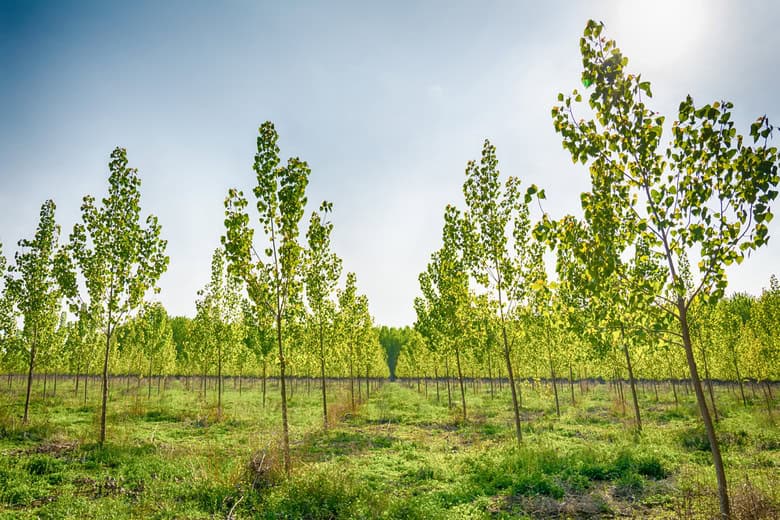
For years, afforestation in India has had a photograph problem. A minister, a company head, or a school group plants a sapling, the cameras leave, and nobody returns to check whether it lived. The old Green Credit norms invited exactly this. Credits were tied to a benchmark of 1,100 trees per hectare within two years of plantation, which rewarded planting and said little about survival.
The 2025 revision to the Green Credit Rules, 2023 (the Rules) tries to fix that. Credits now arrive only after five years of restoration and a minimum canopy density of 40 per cent. The idea is simple: pay for forests that exist, not for saplings that were once planted.
But a rule that measures outcomes is only as good as whoever does the measuring. This piece argues that the revised Rules are a real step towards outcome-based accountability, yet they leave three gaps open: verification, enforcement after a credit is spent, and the narrowness of what is being counted.
II. A Credit That Pays a Legal Debt
The Rules are made under the Environment (Protection) Act, 1986 (the EP Act), which places the programme in public law and exposes it to the usual tests of reasonableness. The Indian Council of Forestry Research and Education (ICFRE) acts as Administrator, while State forest departments identify the degraded forest parcels that can be used.
The more telling feature is what a credit can be used for. It can be exchanged once, to meet compensatory afforestation or corporate social responsibility obligations. Compensatory afforestation is the duty to make up for forest land diverted to other uses under the Van (Sanrakshan Evam Samvardhan) Adhiniyam (Forest (Conservation and Augmentation) Act), 1980 (the Van Adhiniyam). Credits cannot be traded openly, except between a holding company and its subsidiaries. Listed companies can also report them under SEBI’s Business Responsibility and Sustainability Reporting framework.
So a credit is a compliance instrument as much as an ecological one. A company that diverts forest land can discharge its legal duty by pointing to restored land elsewhere. That is not necessarily wrong. But it means the programme’s incentives lean towards administrative convenience, and every weakness below matters more because of it.
III. Who Verifies the Verifier?
Before a credit is issued, the applicant must show five years of restoration, with evidence of survival and canopy recovery. Verification is done through joint inspections by agencies empanelled by ICFRE, the District Forest Officer, and the applicant itself, with satellite imagery, drones, and geo-tagged photographs encouraged. On paper, that is a serious attempt to stop inflated plantation figures.
In practice, the structure has a conflict built into it. State forest departments are not neutral observers. They hold the land, and they often need credits to move downstream approvals along. The independent agencies could correct for this, but the guidelines do not say how those agencies are chosen, what powers they have, or whether they can reject a claim for misrepresentation. Nor do they appear to attach any penalty to false reporting beyond refusing the credit.
Communities are also thin on the ground. Several plantation sites sit in open natural ecosystems that may overlap with Community Forest Resource claims under the Forest Rights Act, 2006, yet the rollout has largely bypassed the gram sabha (village assembly). For those villages, a scheme described as voluntary arrives from above.
IV. When the Credit Is Spent
The harder question comes after issuance. The Rules require the restored site to be protected for at least ten years. If the credit user does not maintain it for the full period, it must deposit the remaining maintenance cost with the Administrator, who passes it to the State authority. That secures the money. It does not secure the forest. Once the credit has been used to clear a diversion, the original beneficiary has little reason to care how the site fares. If it degrades, is encroached upon, or fails, no actor is clearly made to repair it, and nothing allows the credit to be revoked or replaced.
The asymmetry is plain. The diversion of forest land is permanent. The restoration duty is time-bound. This is the old weakness of offset schemes, and the Rules do not resolve it.
The enforcement design adds to the problem. The programme runs on delegated legislation and executive guidelines. Missing the canopy threshold simply means no credit; it does not attract liability. Fraudulent claims, false survival data, and unauthorised transfers are not expressly addressed, and the Administrator has no stated power to cancel issued credits or blacklist offenders. That leaves the general penal provisions of the EP Act, a blunt tool for a specialised regime. There is also no dedicated appellate forum, so anyone aggrieved must approach the High Courts in writ jurisdiction or the National Green Tribunal.
V. Counting What Can Be Counted
Canopy density is easy to verify, which is exactly why it is risky as the main yardstick. A 40 per cent threshold rewards whoever reaches it fastest, and fast-growing monocultures get there well before slower native mixtures with far more ecological value.
The problem sharpens because of where plantations are going. Field assessments suggest that many sites fall in open natural ecosystems, such as grasslands and scrublands. Land without dense tree cover is not automatically degraded, and planting trees across it can convert a habitat rather than restore one.
Better yardsticks exist. The Environment Ministry has described the Aravalli Green Wall initiative as looking beyond canopy to biodiversity, soil stabilisation, and wildlife presence. Credits that carry a higher value for native species richness or documented return of fauna would push the Rules in the same direction.
Courts have long accepted that environmental harm cannot always be priced and replaced. In Vellore Citizens’ Welfare Forum v Union of India, the Supreme Court held the precautionary principle to be part of the law of the land. A young plantation, however dense, is not an old forest, and the State’s duty under Article 48A of the Constitution and the public trust doctrine does not shrink because the loss has been given a price. That matters all the more as States begin monetising green assets. Delhi’s cabinet, for instance, cleared a framework in January 2026 to turn urban green projects into revenue. Revenue is fine. It should not become the point.
VI. Conclusion
The revised Rules move India from planting to proving, and that is progress. It will count only if three things follow. Verification needs independent audits and published data. Liability needs to follow the forest after the credit is spent, with defined sanctions and a power to cancel credits obtained by fraud. And credits should reward ecological quality, not just shade. Without these, the Rules risk replacing the symbolic sapling with a symbolic percentage.
Ananya Singh is a law student at Jindal Global Law School, O.P. Jindal Global University.